Ghost Filter
Cut clean. Push hard. Let it sing.
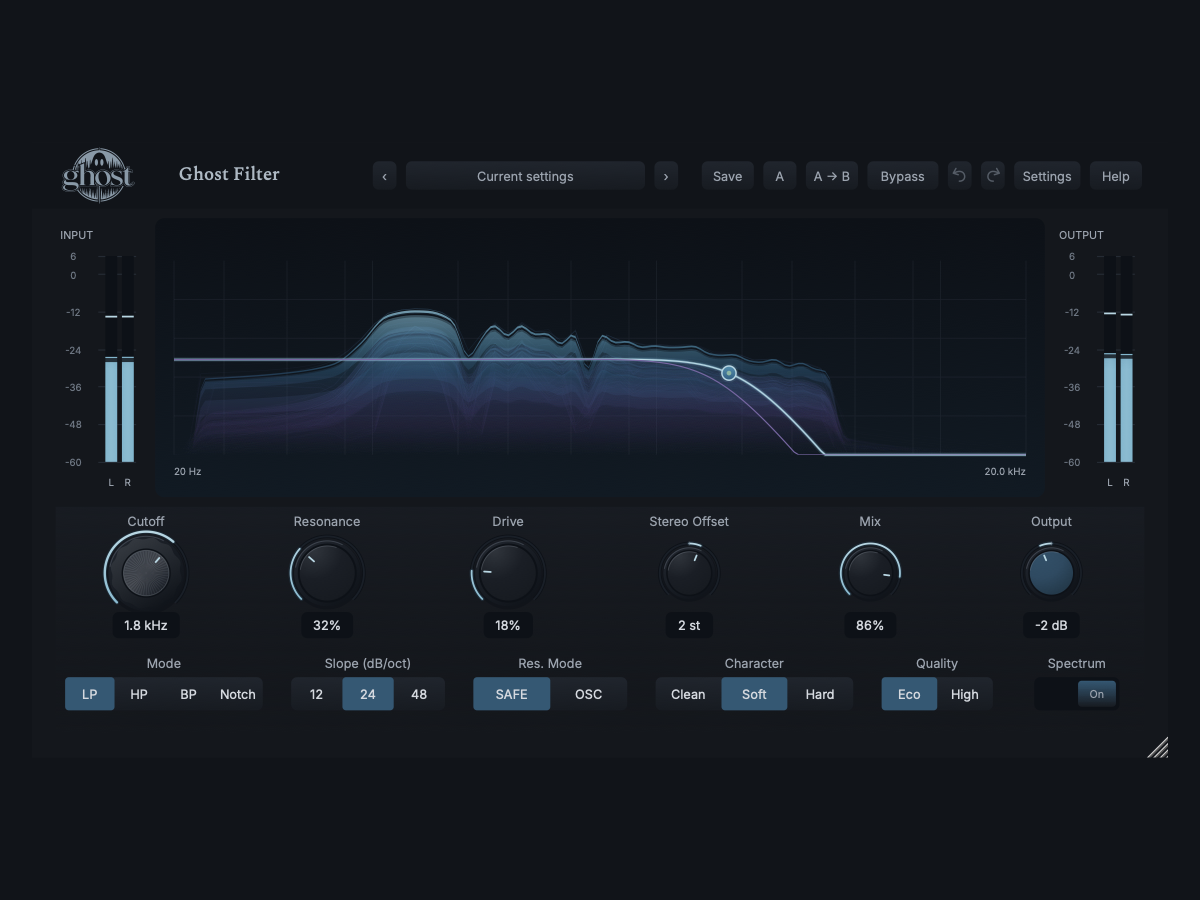
Ghost Filter is the fast, musical multimode filter at the center of the Ghost workflow. Move from transparent cleanup to resonant sweeps, stereo movement, driven filtering, and true self-oscillation without turning a basic filtering job into a routing exercise. Cutoff modulation operates naturally in musical pitch space, stereo offset can pull the left and right cutoff points apart, and selectable drive characters let the signal hit the filter cleanly or with added edge. SAFE resonance keeps aggressive settings controlled; OSC mode lets the filter become a tone source of its own.
SILKY CLEANUPSCREAMING RESONANCESTEREO MOTIONSELF-OSCILLATION
Ghost Delay
Echo that knows when to behave—and when not to.
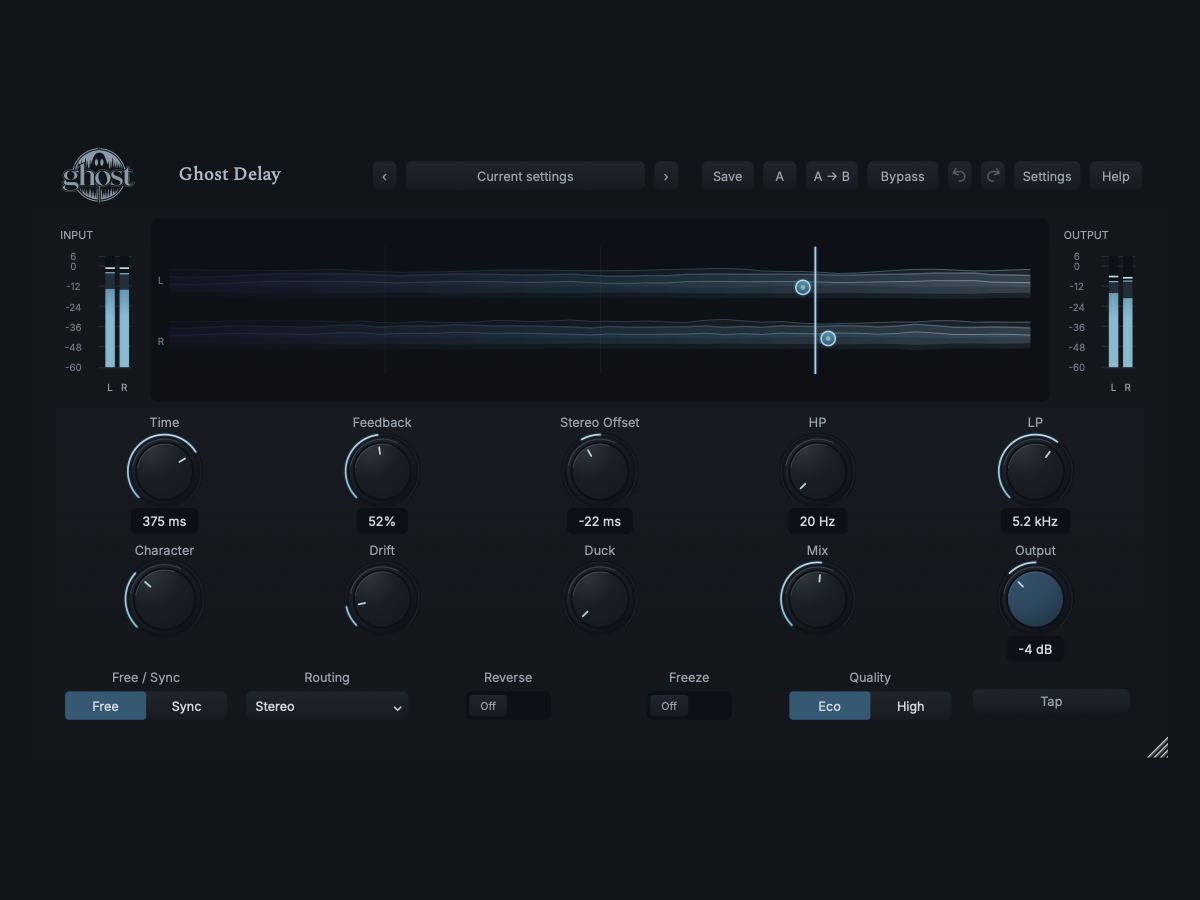
Ghost Delay is a compact stereo delay that covers the territory you reach for every day, then keeps going. Clean digital repeats, ping-pong motion, filtered dub echoes, warm driven trails, warped movement, reverse echoes, regenerative feedback, ducking, and playable infinite holds all live inside one focused delay. Its Interactive Echo Field turns the delay line into something you can see and touch, making timing, feedback, stereo behavior, and evolving repeats feel less like parameters and more like a playable space.
DUB ECHOESWARPED REPEATSPING-PONG MOTIONINFINITE HOLDS
Ghost Crush
Reduce the resolution. Keep the intention.
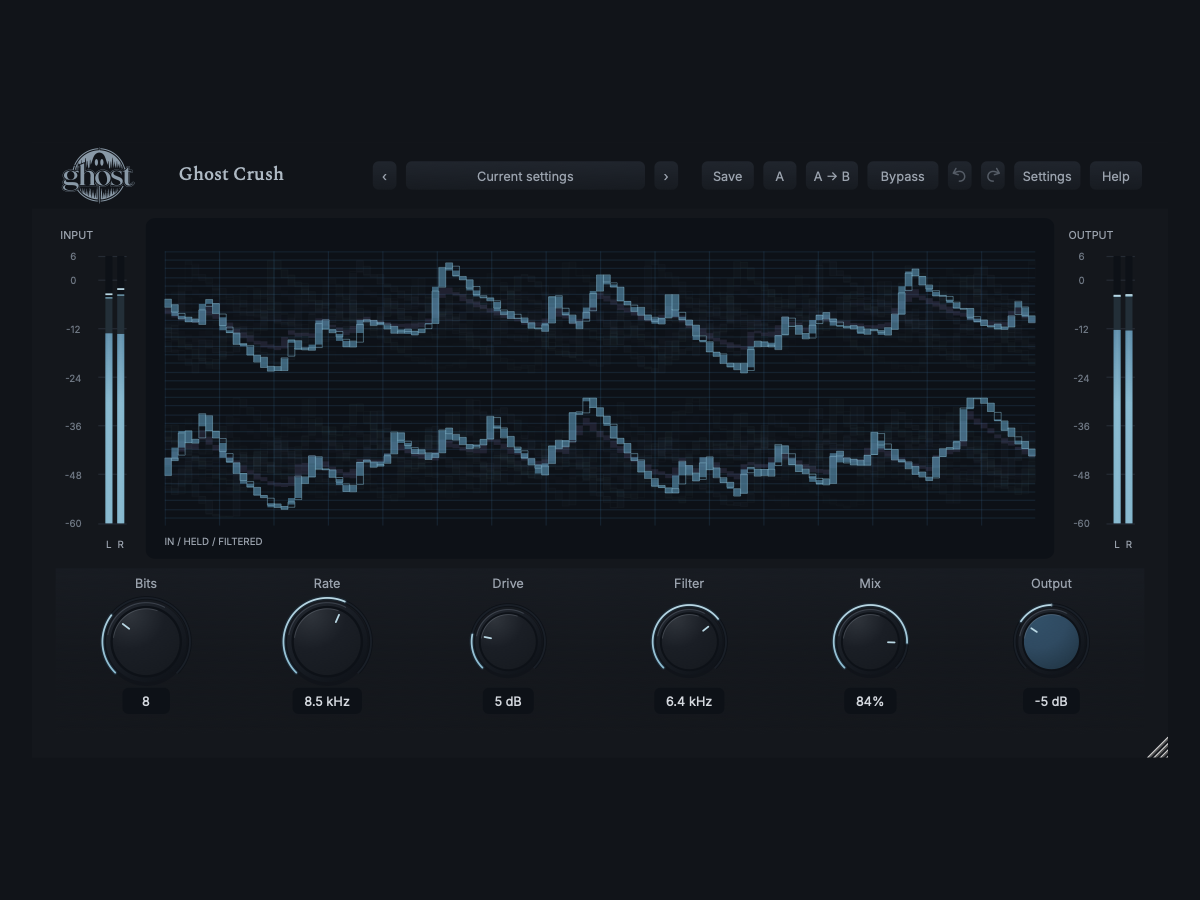
Ghost Crush is digital destruction without the lo-fi junk drawer. Bit depth and effective sample rate are independent, giving you precise control over quantization grit, sampler crunch, aliasing, stepped motion, and total digital collapse. Drive changes how the signal hits the quantizer, while a simple post-crush filter lets you shave off the fizz or deliberately bury the result. It is direct, deterministic, and built to make resolution itself a playable parameter.
SAMPLER GRITALIASING CHAOS1-BIT DESTRUCTIONFILTERED CRUNCH
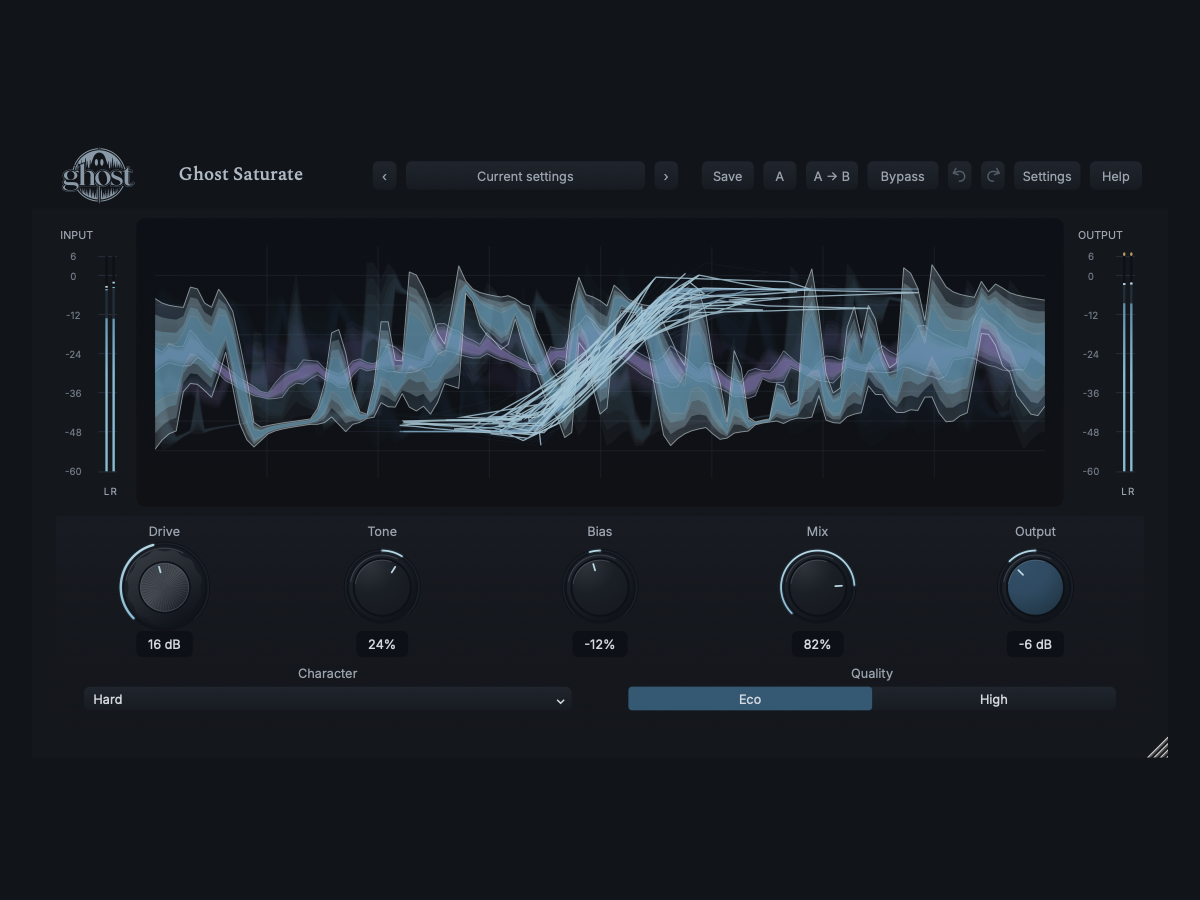
Ghost Saturate
Eight ways to make the waveform confess.
Ghost Saturate is a focused nonlinear processor with eight genuinely different characters—from smooth harmonic weight to hard clipping, tape-like compression, wavefolding, slew distortion, and unstable broken-circuit behavior. Drive the input, shift the operating point with Bias, contour the result with Tone, then blend it in parallel or commit completely. The goal is not a museum of modeled boxes. It is a compact set of distinct nonlinear behaviors that stay useful across subtle enhancement, aggressive distortion, and experimental reshaping.
HARMONIC WEIGHTTAPE-LIKE HEATWAVEFOLDING EDGEBROKEN-CIRCUIT CHAOS
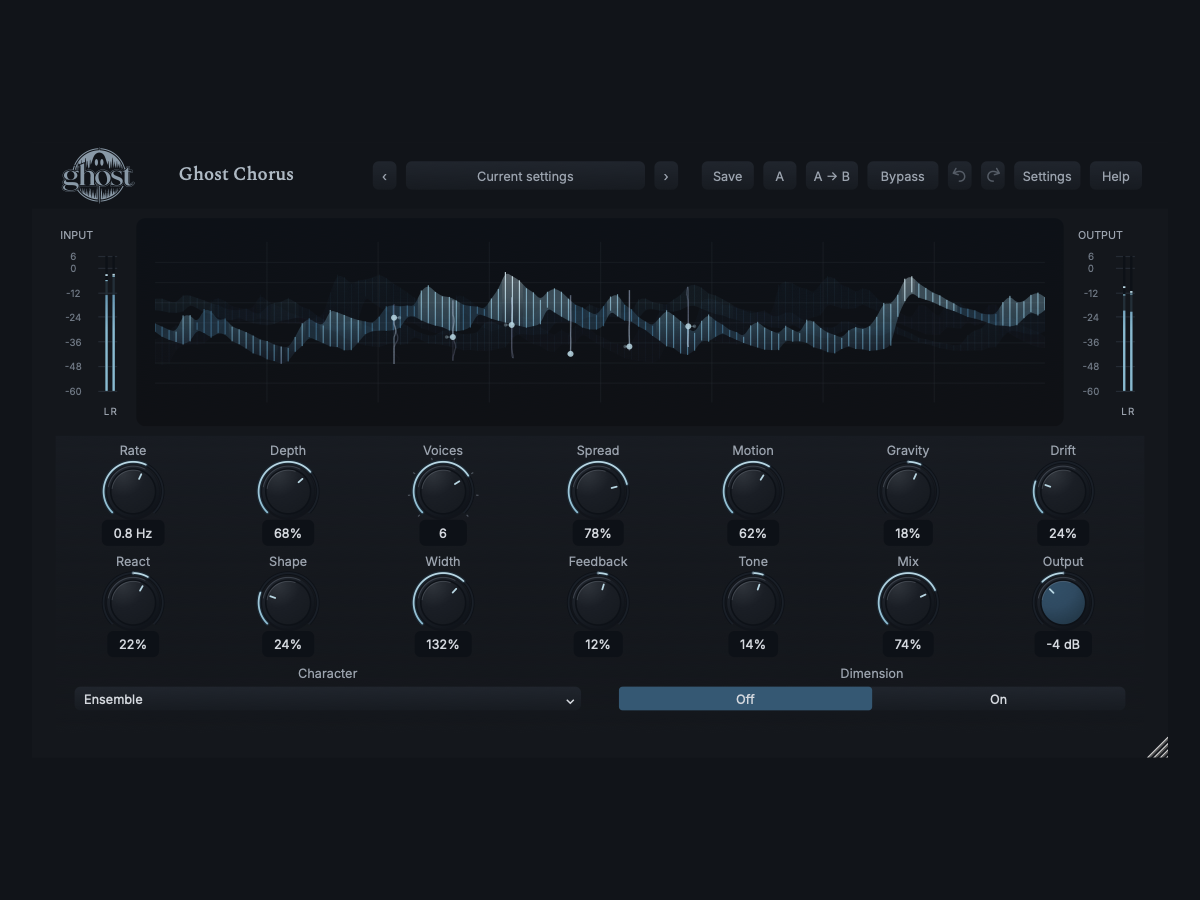
Ghost Chorus
A chorus where the voices actually know each other.
Ghost Chorus builds its sound from an ensemble of interacting modulated delay voices. It can be a subtle widener, a familiar lush chorus, a dense ensemble, or a wandering organic modulation field—but the movement comes from relationships between voices rather than eight copies of the same LFO. Spread distributes the ensemble. Motion controls how independently the voices travel. Gravity makes them attract or repel. Drift introduces bounded instability, while React lets the incoming sound influence the behavior. The result is chorus that can breathe, cluster, separate, and evolve.
LUSH ENSEMBLESORGANIC DRIFTLIVING VOICESWIDE MOTION
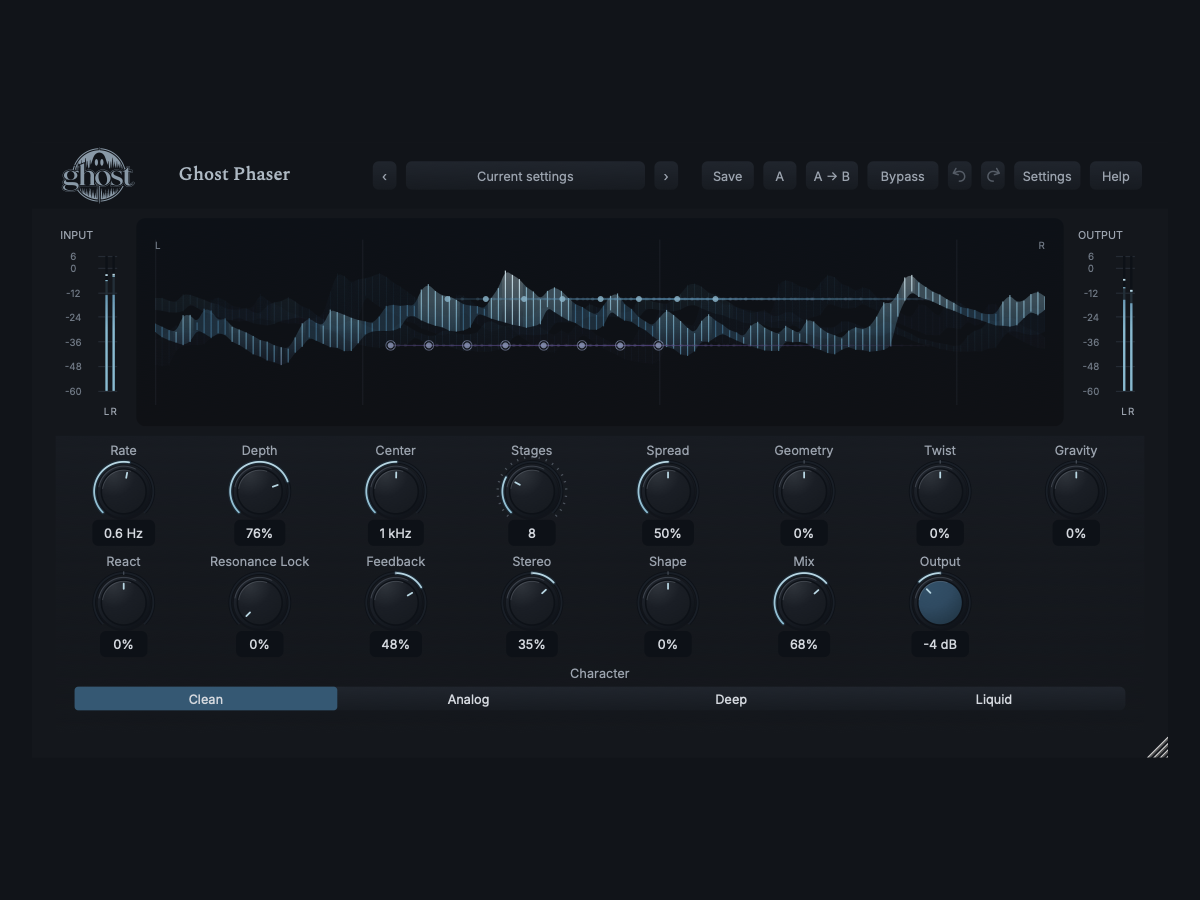
Ghost Phaser
Phase is geometry. Bend it.
Ghost Phaser replaces the fixed notch ladder with a deformable multi-stage phase network. Choose how many spectral nodes exist, how far they spread, where they accumulate, how they move, and how strongly they influence one another. It handles classic sweeping phaser sounds easily, but Geometry, Twist, Gravity, React, Resonance Lock, and stereo behavior let the phase network become liquid, asymmetric, harmonic, reactive, and structurally strange without abandoning the core allpass architecture.
LIQUID SWEEPSDEFORMED GEOMETRYREACTIVE MOTIONRESONANT DEPTH
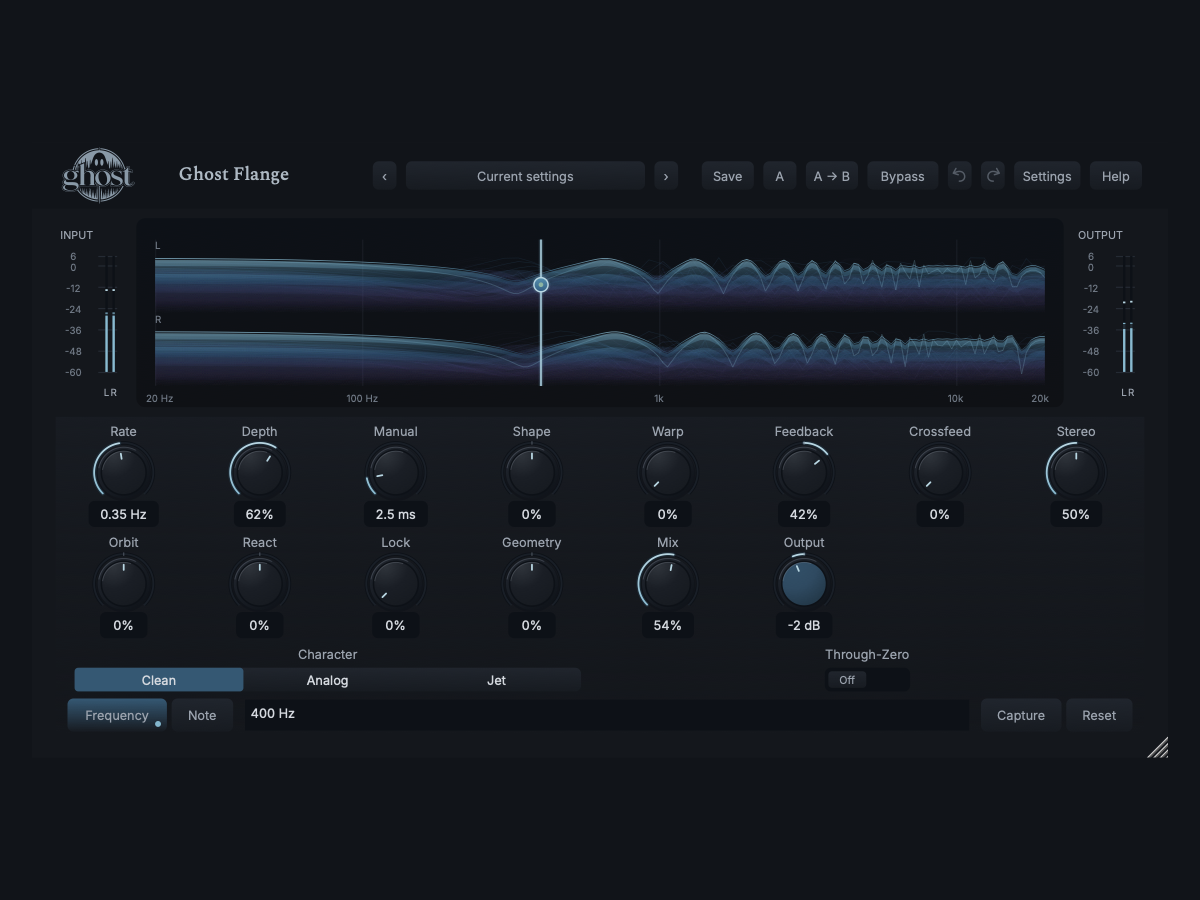
Ghost Flange
From jet sweep to impossible comb geometry.
Ghost Flange starts with the essential machinery of flanging—two modulated short delays and regenerative feedback—then treats the resulting comb structure as something that can be warped, steered, crossfed, locked, and moved through stereo space. Dial in classic flanging, through-zero cancellation, metallic resonances, wide orbital sweeps, or controlled self-regeneration. The more you push it, the more the comb itself becomes the instrument.
JET SWEEPSTHROUGH-ZERO VOIDMETALLIC RESONANCEORBITAL MOTION
Ghost Tremolo
One cycle. More rhythm than it should contain.
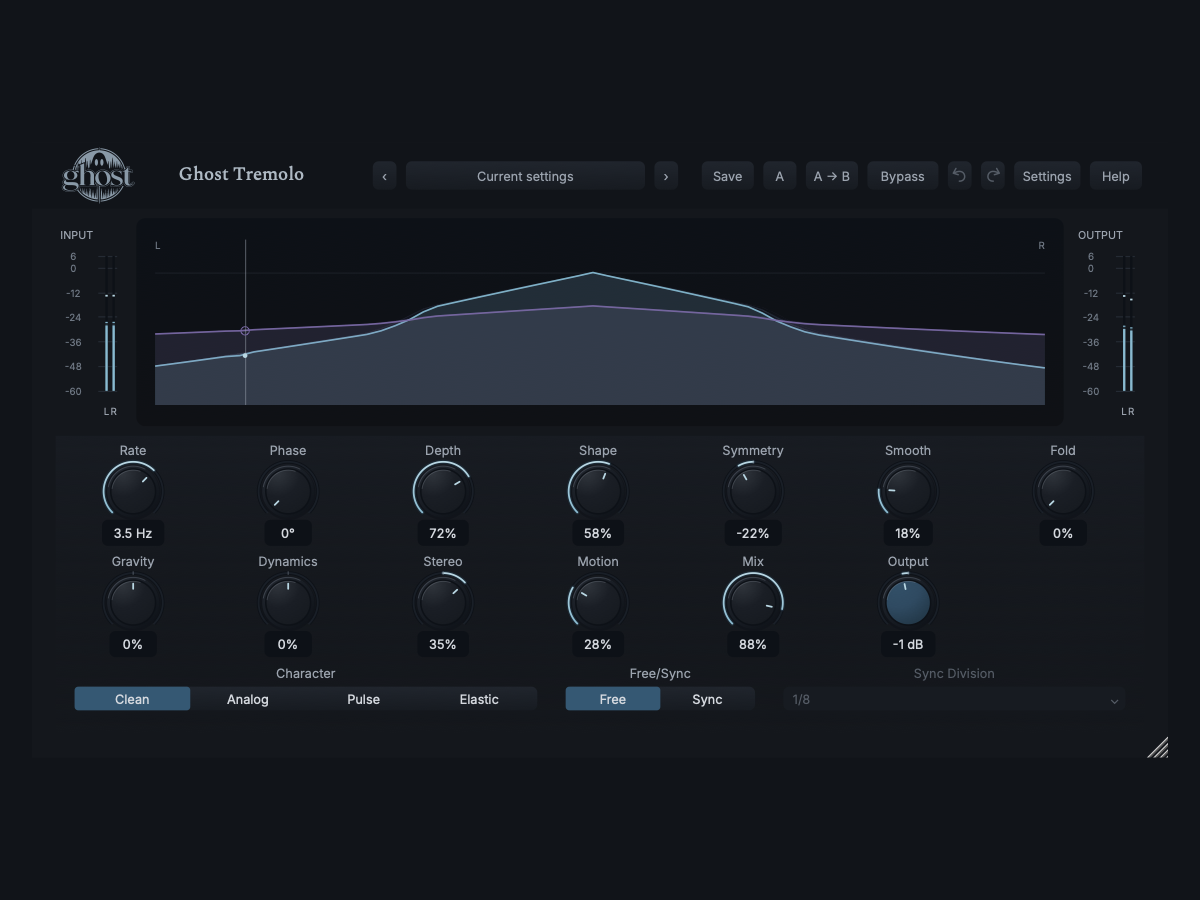
Ghost Tremolo is a stereo amplitude-shaping system that creates complex rhythmic motion by deforming a single continuous modulation cycle instead of hiding a sequencer behind the panel. Use it as traditional tremolo or autopan, then push Shape, Symmetry, Fold, Gravity, Dynamics, Stereo, and Motion to turn that cycle into pulses, gates, evolving accents, folded rhythms, and source-responsive movement. It can lock to the host or move freely, but the rhythm always remains part of one coherent gesture.
PULSING RHYTHMSHARD GATESSTEREO MOTIONSOURCE-REACTIVE GROOVE
Ghost Rotary
A rotary cabinet until physics starts slipping.
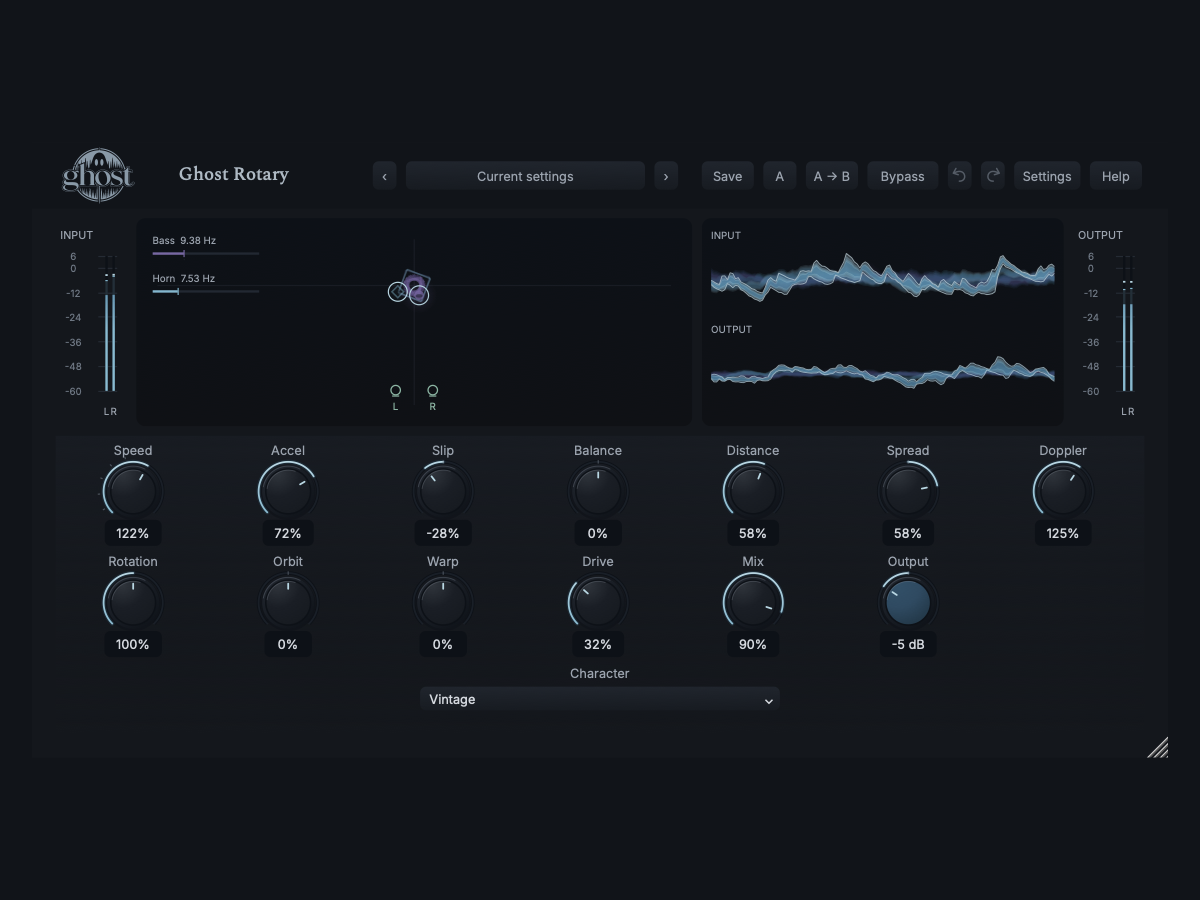
Ghost Rotary models the moving acoustic relationships of a dual-rotor system, including separate horn and low-rotor behavior, inertia, Doppler shift, distance, crossover balance, and spatial rotation. At conventional settings it delivers the motion and depth expected from a serious rotary effect. Then the machine starts bending. Slip loosens the mechanical relationship. Orbit expands the spatial trajectory. Warp deforms the motion. Extreme speed moves beyond realistic cabinets while remaining rooted in the same rotating-source physics.
CLASSIC ROTATIONREAL DOPPLER MOTIONWIDE ORBITSIMPOSSIBLE SPEED
Ghost Frequency Shifter
Move every frequency. Then bend the map.
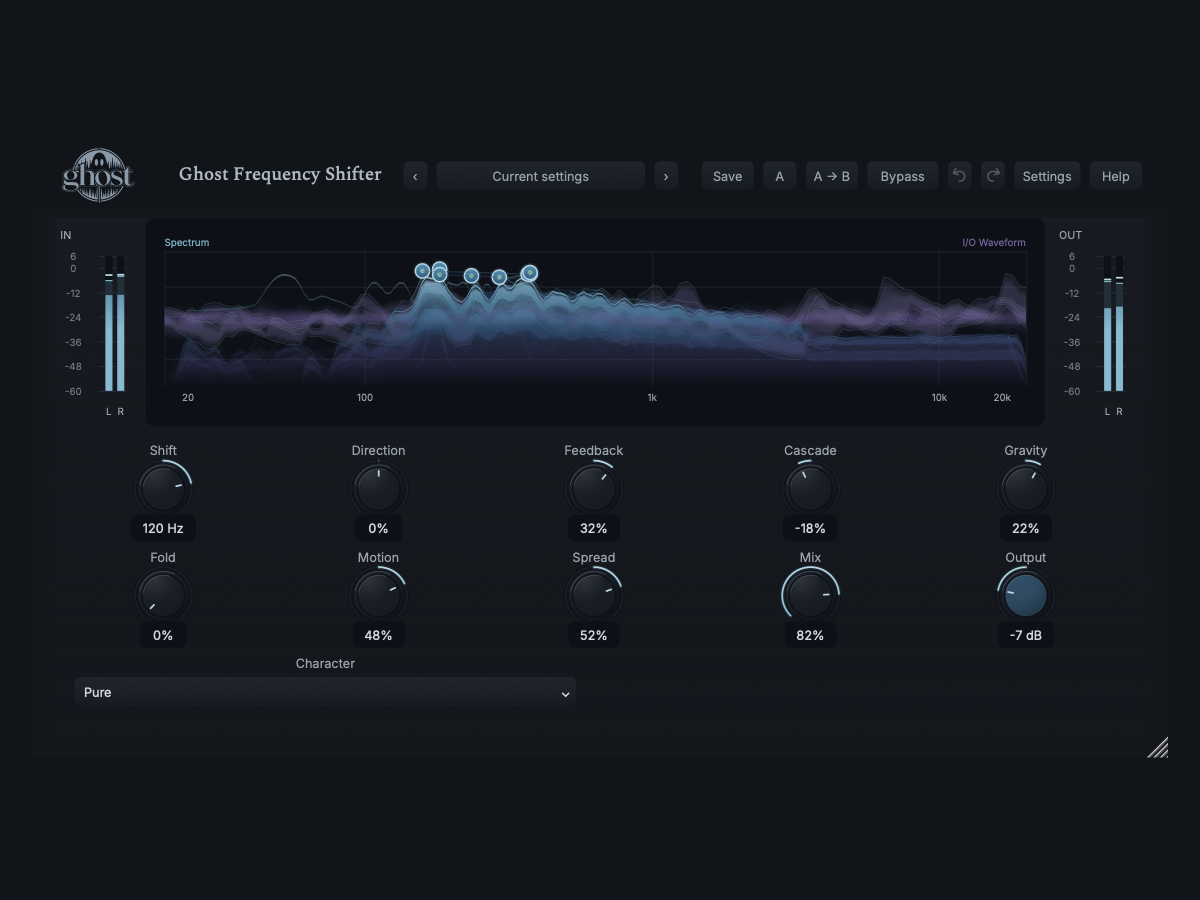
Ghost Frequency Shifter is a precision single-sideband translator that grows into a recursive spectral-geometry processor. Tiny sub-Hertz shifts create beating and phase-like motion; larger shifts produce classic inharmonic translation; feedback, cascading, folding, and spectral attraction can turn the same engine into something far more structural. Gravity and Anti-Gravity organize translated energy. Cascade lets shifts recurse. Fold pushes spectral motion against its boundaries. Motion and Spread pull the result into evolving stereo geometry.
SUB-HZ DRIFTINHARMONIC MOTIONRECURSIVE SHIFTSSPECTRAL GRAVITY
Ghost Pitch Shifter
One pitch becomes a population.
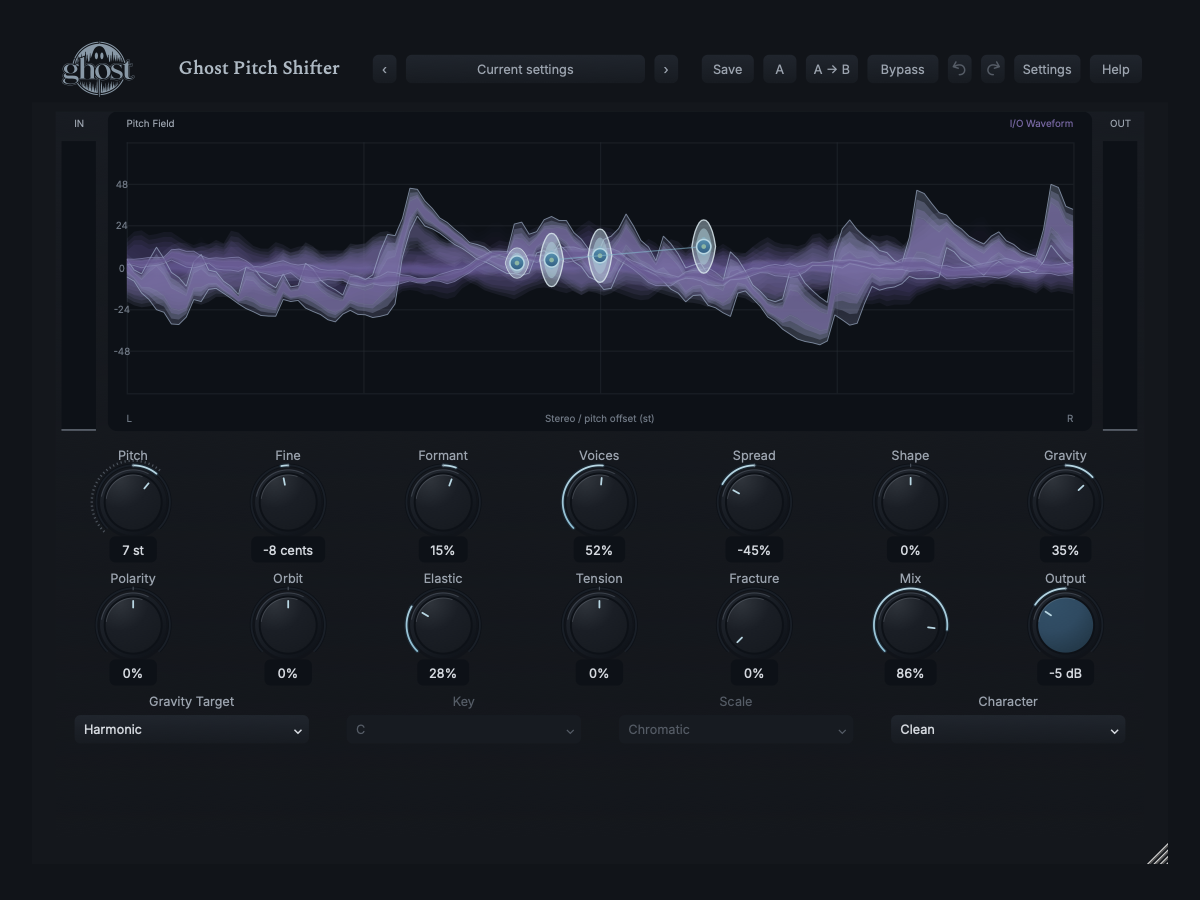
Ghost Pitch Shifter begins as a precise, high-quality pitch processor and expands into a dynamic population of generated voices. Add unison voices, harmonies, or octave shifts, then let those voices attract, repel, orbit, stretch, collide, fracture, and reorganize around harmonic or scale relationships. Instead of programming a stack of separate harmonizer voices, you shape the behavior of the pitch population as a whole. At neutral settings it stays practical. At the edges it becomes a playable pitch ecosystem.
PRECISE PITCHUNISON SWARMSLIVING HARMONIESPITCH ECOSYSTEMS
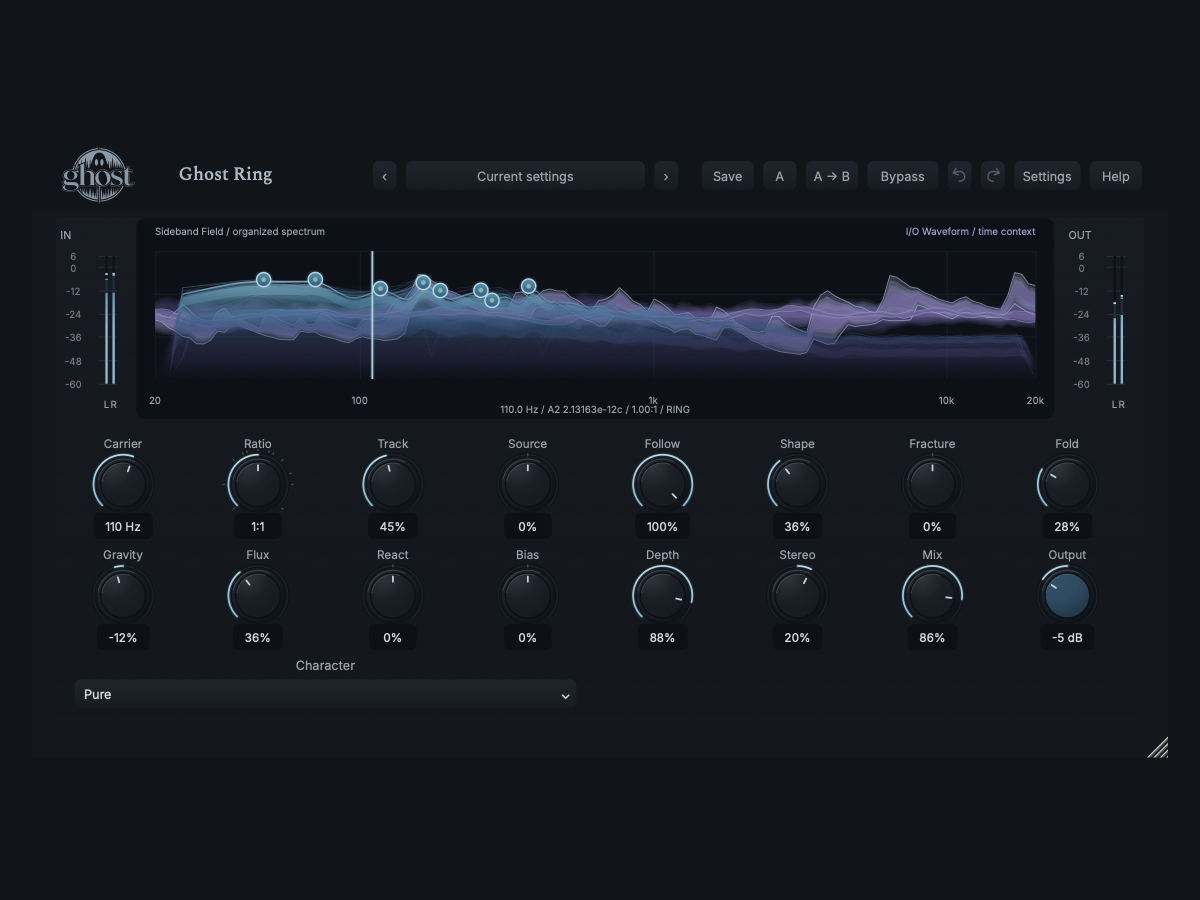
Ghost Ring
Ring modulation that learned harmony, tracking, and synthesis.
Ghost Ring takes carrier interaction far beyond a fixed oscillator multiplied against the input. It spans classic ring modulation, harmonic and inharmonic sidebands, tracked carrier relationships, amplitude modulation, audio-driven resynthesis, and monophonic synthesis—all emerging from the same carrier architecture. Move between fixed frequency and source tracking. Lock into musical ratios or pull away from them. Fold and fracture the carrier geometry, reorganize sidebands with Gravity, and let the source itself become part of the synthesis behavior.
CLASSIC RING MODTRACKED CARRIERSHARMONIC SIDEBANDSAUDIO-DRIVEN SYNTHESIS
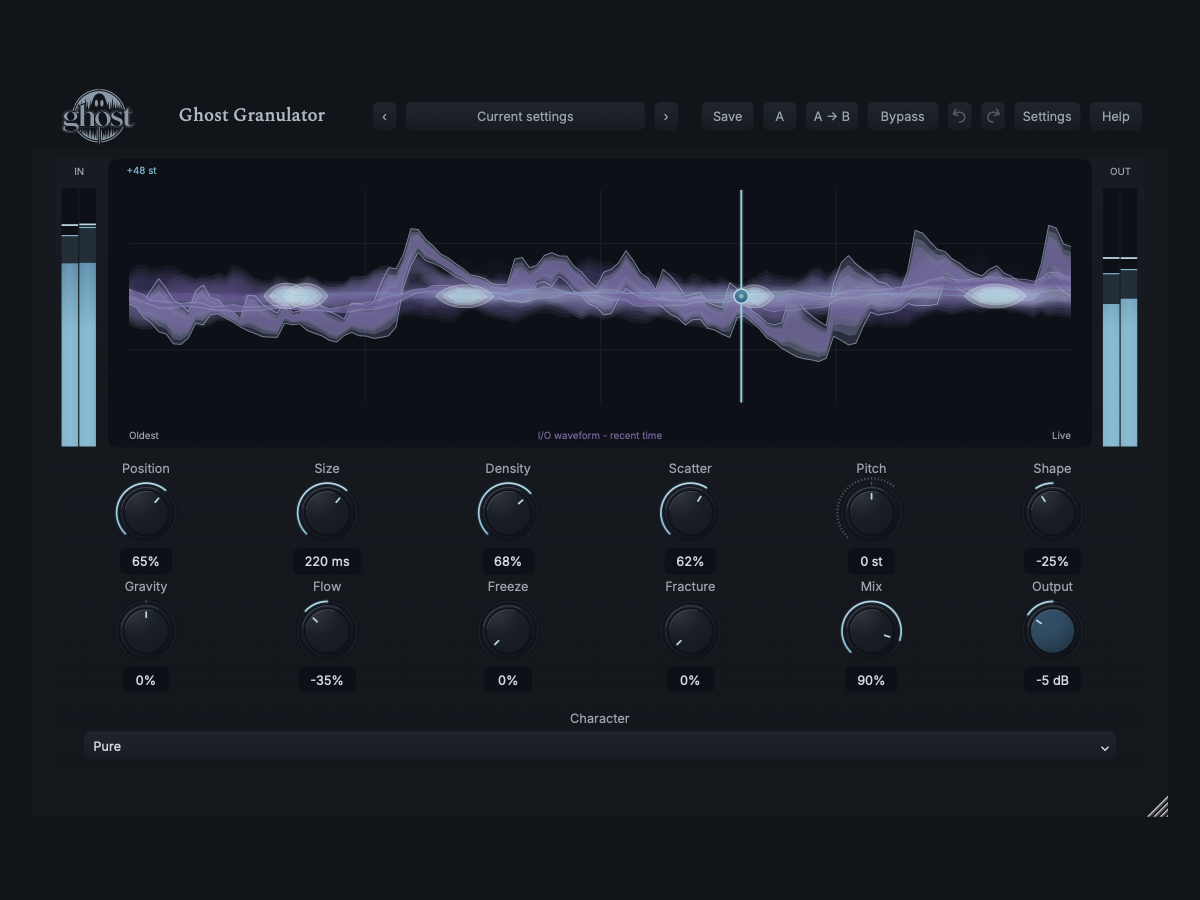
Ghost Granulator
Captured time, behaving like a living population.
Ghost Granulator treats grains as inhabitants of a rolling history rather than anonymous particles fired from a buffer. At conservative settings it is a clean real-time granulator. Push deeper and grains begin to cluster, flow, attract, repel, inherit momentum, collide, fracture, form families, rebound from temporal boundaries, and persist inside frozen time. Position acts as a temporal attractor, not just a playback cursor. Gravity shapes relationships. Flow gives the population direction. Freeze stops the creation of new time without necessarily stopping the life already inside it.
ROLLING TIMEGRAIN SWARMSFROZEN WORLDSLIVING TEXTURES
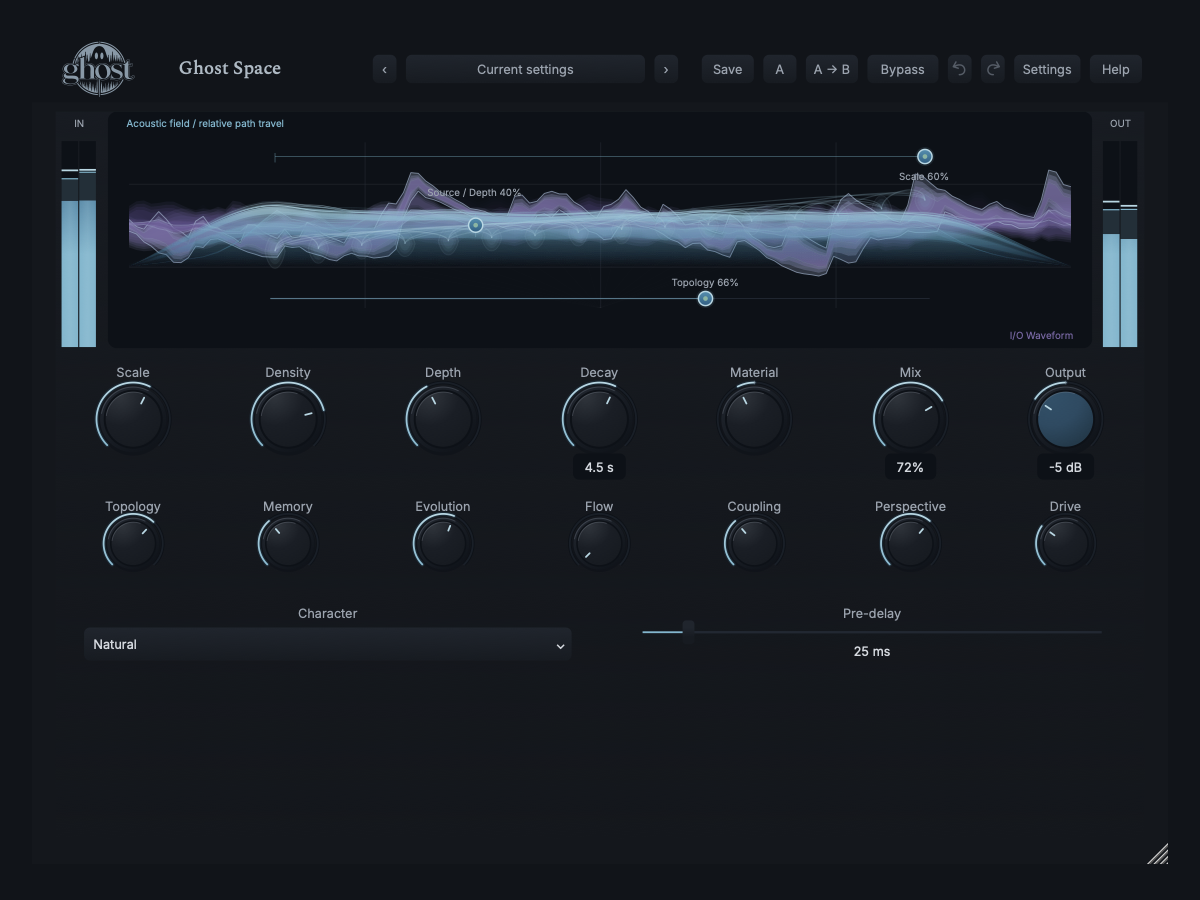
Ghost Space
Reverb as a place that remembers being played.
Ghost Space transforms sound into a living acoustic field. Incoming audio propagates through evolving pathways, reflections, scattering, diffusion, and accumulated state. The source changes the field, and the field changes how the next sound moves through it. At straightforward settings, Ghost Space behaves as a polished conventional reverb. Increase density, topology, depth, memory, and evolution and the boundary between source, ambience, smear, and environment begins to dissolve. Rooms, chambers, halls, plates, and impossible spaces emerge from field geometry instead of a static room-type menu.
POLISHED REVERBLIVING ROOMSEVOLVING FIELDSIMPOSSIBLE SPACES
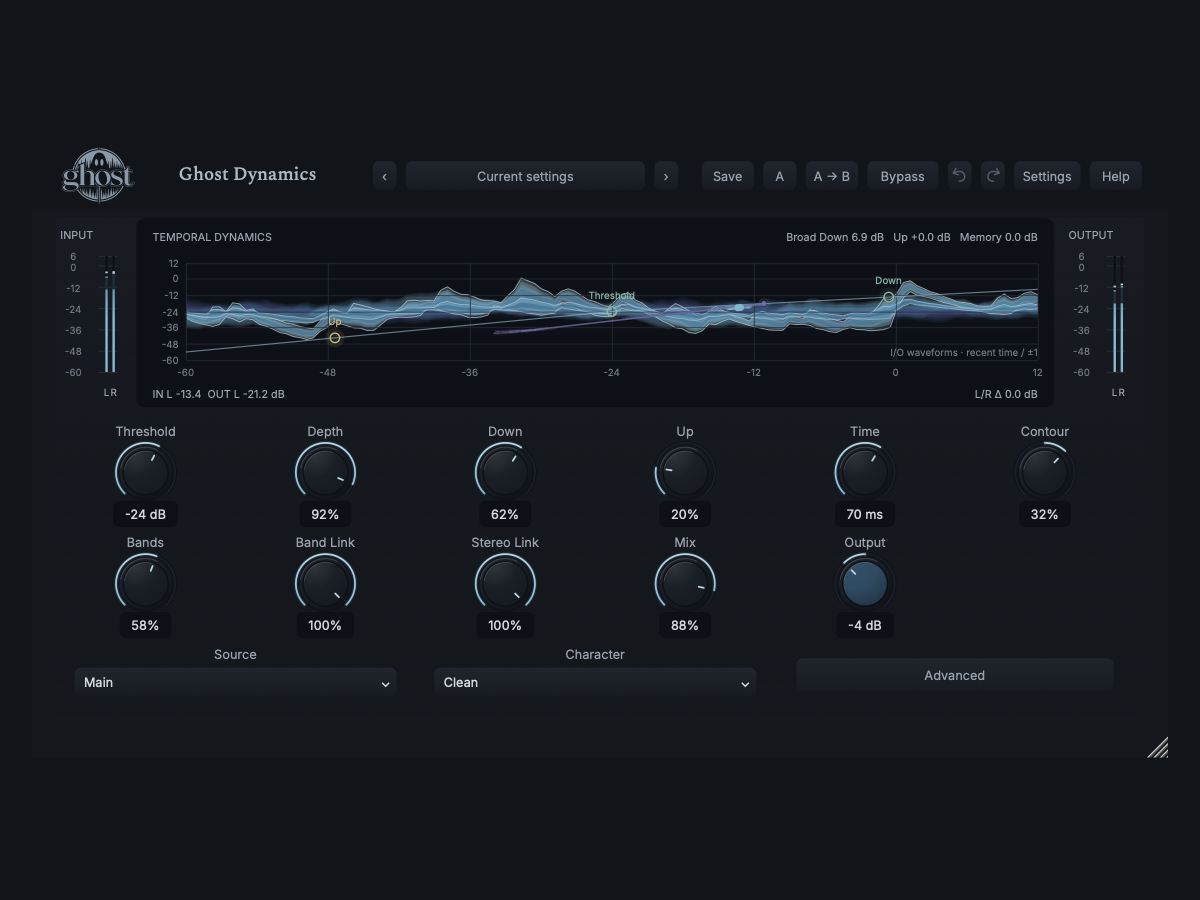
Ghost Dynamics
Compression is only one direction.
Ghost Dynamics is a unified energy transformation system for controlling how incoming energy becomes outgoing energy across level, time, frequency, and stereo structure. It works immediately as a serious conventional compressor, but its model also reaches upward compression, transient shaping, ducking, multiband behavior, frequency-conscious unmasking, and OTT-style bidirectional dynamics without turning those jobs into disconnected modes. The processor is designed around energy relationships rather than a pile of dynamics algorithms. Push down, pull up, reshape attacks and bodies, split behavior across frequency, or let an external sidechain drive the transformation—all inside the same coherent system.
SERIOUS COMPRESSIONTRANSIENT SCULPTINGUPWARD ENERGYMULTIBAND IMPACT
Ghost Tone
Move the weight of a sound without losing the sound.
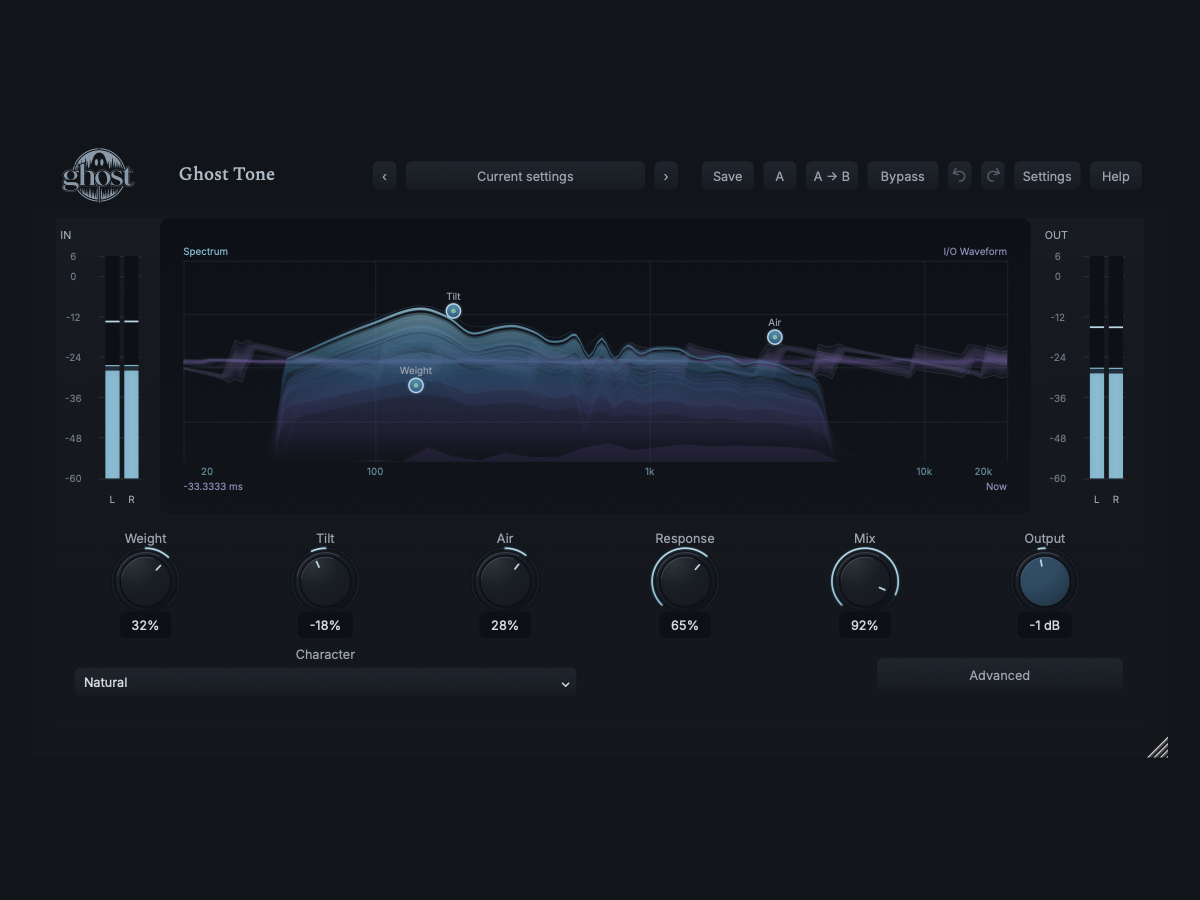
Ghost Tone is a perceptual spectral-balance processor built around three interacting ideas: **Weight, Tilt, and Air**. It is not three EQs in series. Instead, it identifies where the source's meaningful spectral foundation and hierarchy live, then reshapes that balance while trying to preserve the identity that made the sound recognizable in the first place. Use it for ordinary tonal correction and enhancement, or push it until the spectral center of gravity reorganizes dramatically. Ghost Tone is designed to make a sound heavier, lighter, darker, brighter, more open, or more vivid without collapsing into crude bass boost, harshness, or generic excitement.
PERCEPTUAL WEIGHTADAPTIVE TILTOPEN AIRSOURCE-AWARE TONE
Ghost Stereo
Width is distance. Stereo is relationship.
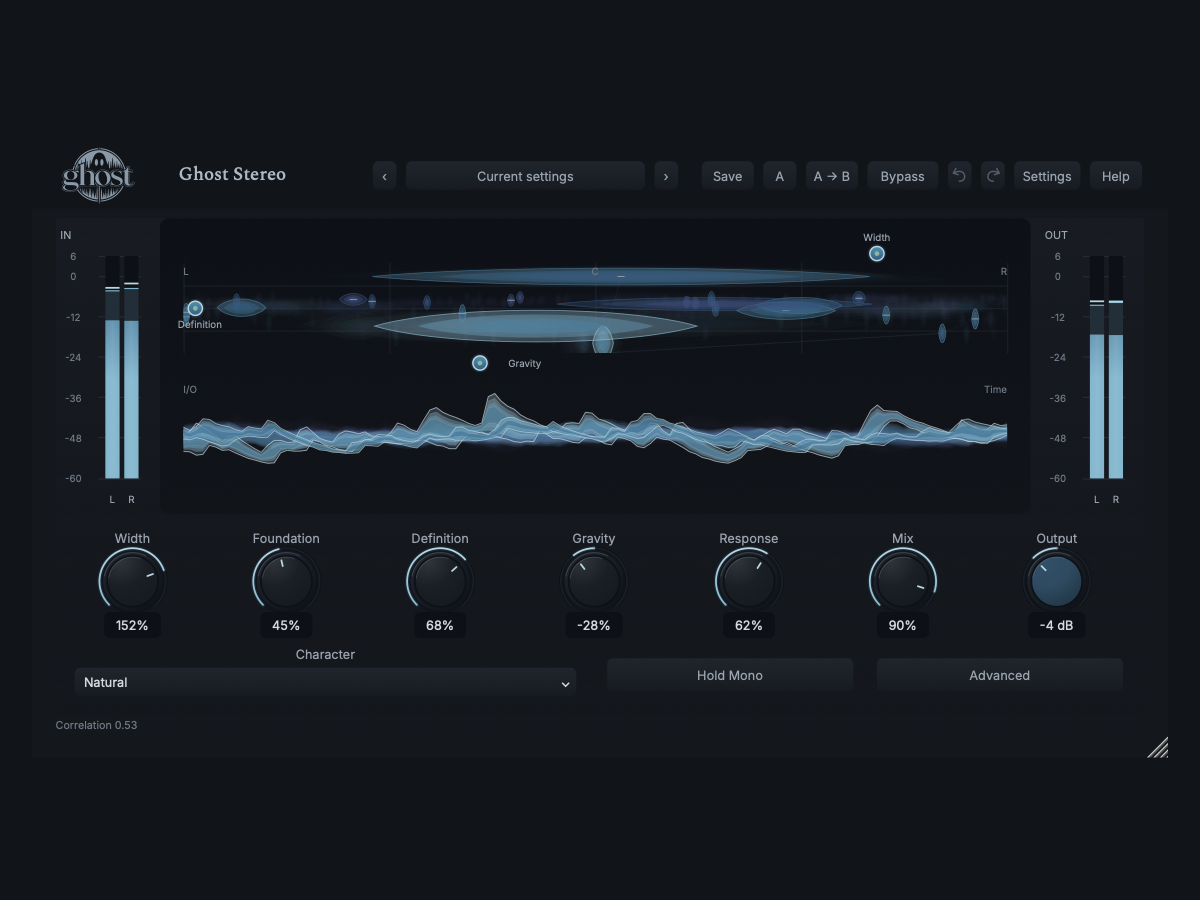
Ghost Stereo treats the stereo image as a field of relationships—position, extent, coherence, and hierarchy—instead of reducing width to a Mid/Side gain knob. It reshapes the spatial organization already present in a signal while protecting localization, low-frequency foundation, coherence, and mono viability. Width controls how far apart structures feel. Definition controls how distinctly separated they remain. Gravity moves the perceptual center of mass. Response determines how quickly the spatial model follows the source. The result can be wider, tighter, clearer, more stable, or deliberately impossible without secretly adding chorus, Haas delay, or reverb.
WIDER IMAGESSOLID LOW ENDSPATIAL DEFINITIONMONO-SAFE MOTION
Ghost Utility
See the signal math. Fix it exactly.
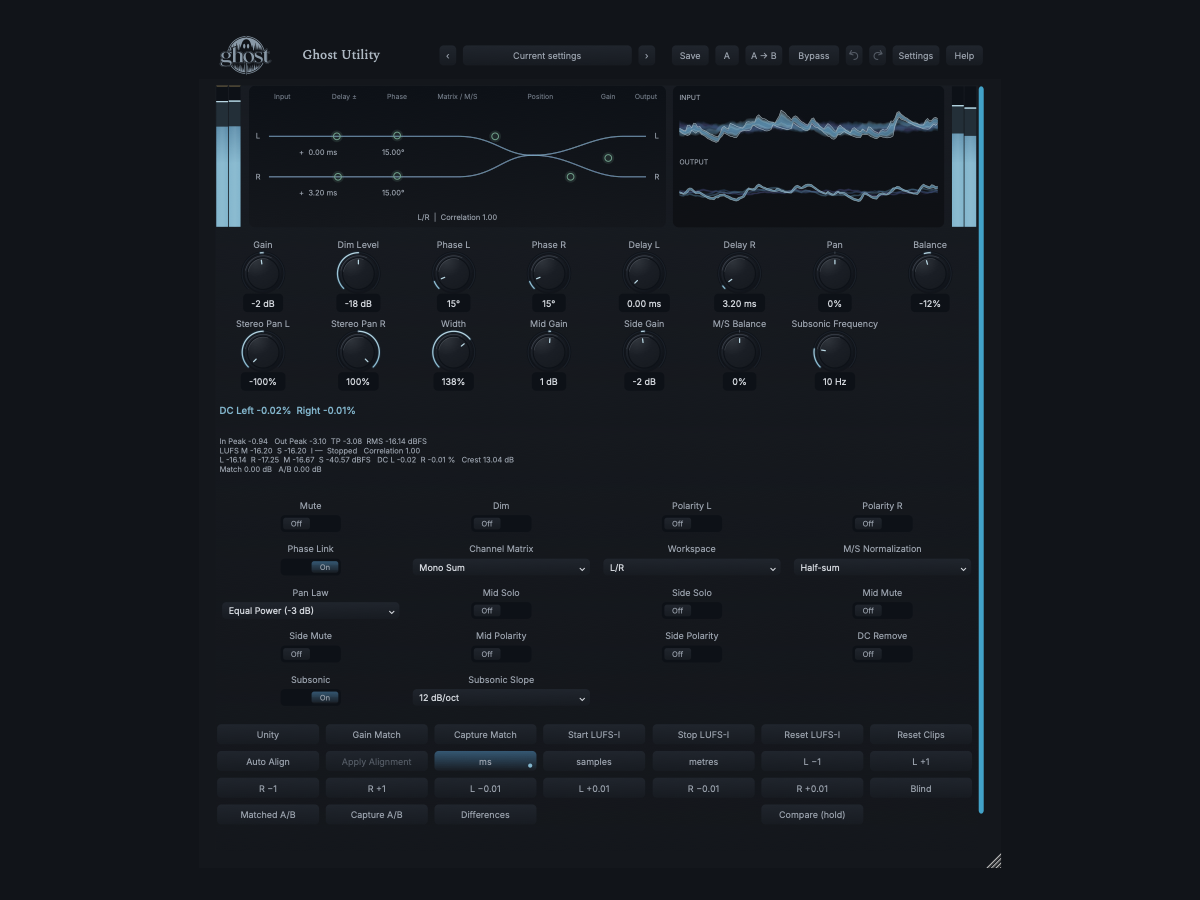
Ghost Utility is the transparent technical workbench of the collection. It handles gain, channel topology, polarity, phase, sample and sub-sample alignment, stereo positioning, Mid/Side representation, measurement, signal hygiene, and controlled A/B comparison without adding creative character. The central idea is simple: invisible signal relationships should become visible geometry. Instead of forcing every technical job through a generic meter panel, Ghost Utility shows the measurement that matters for the operation you are performing.
PRECISION GAINPHASE ALIGNMENTSTEREO CONTROLVISIBLE SIGNAL MATH
Ghost Degrade
Don't add damage. Build something that can fail.
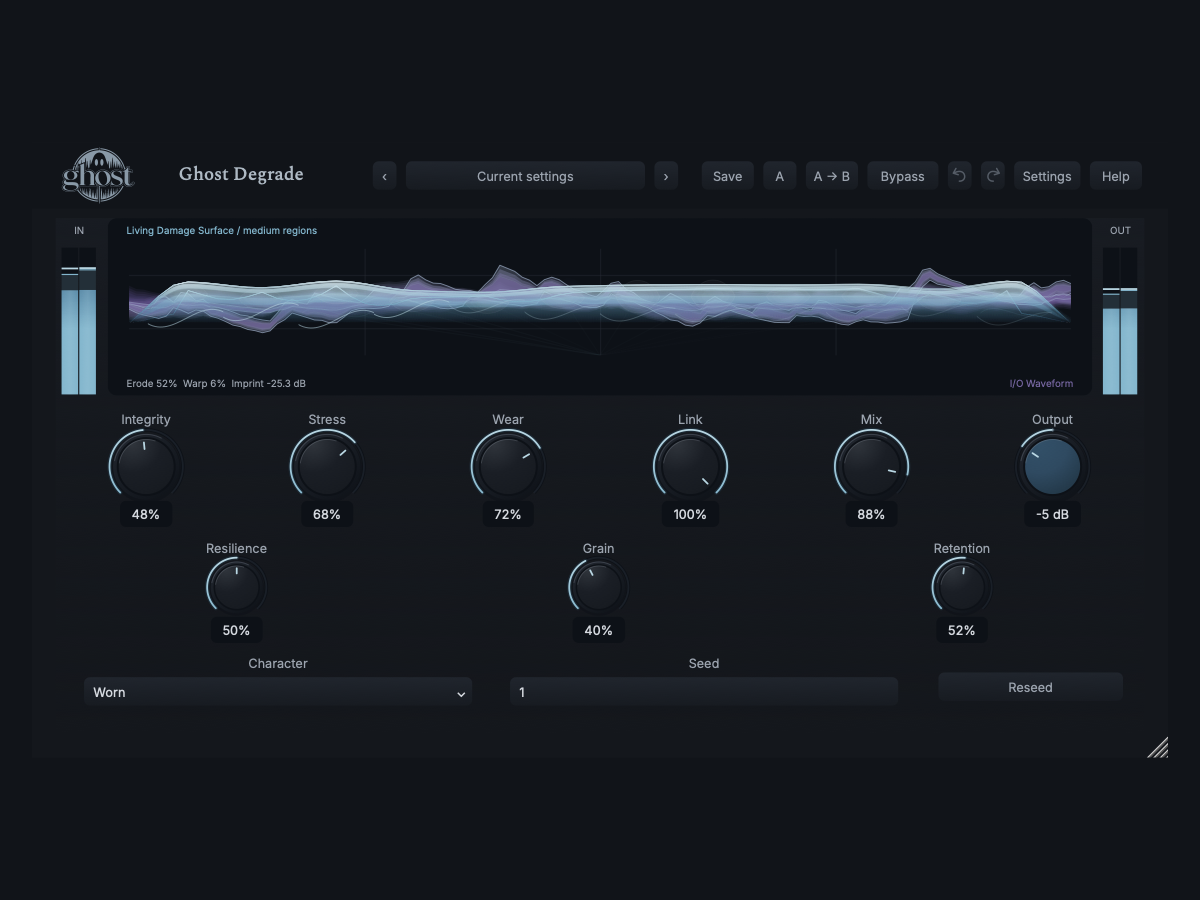
Ghost Degrade models audio moving through a deteriorating medium whose ability to preserve information is breaking down. Instead of stacking noise, filtering, wow, dropout, and distortion, it gives the medium integrity, stress, wear, material properties, and memory—then lets failures emerge from the relationship between the source and that damaged system. Stress creates weakness. Weakness can become failure. Failure can leave scars. High Wear allows those scars to influence what happens next. The result can move from subtle aging to catastrophic, coherent breakdown while remaining descended from the source rather than turning into arbitrary glitch decoration.
SUBTLE AGINGPERSISTENT SCARSSOURCE-DRIVEN DAMAGECATASTROPHIC FAILURE
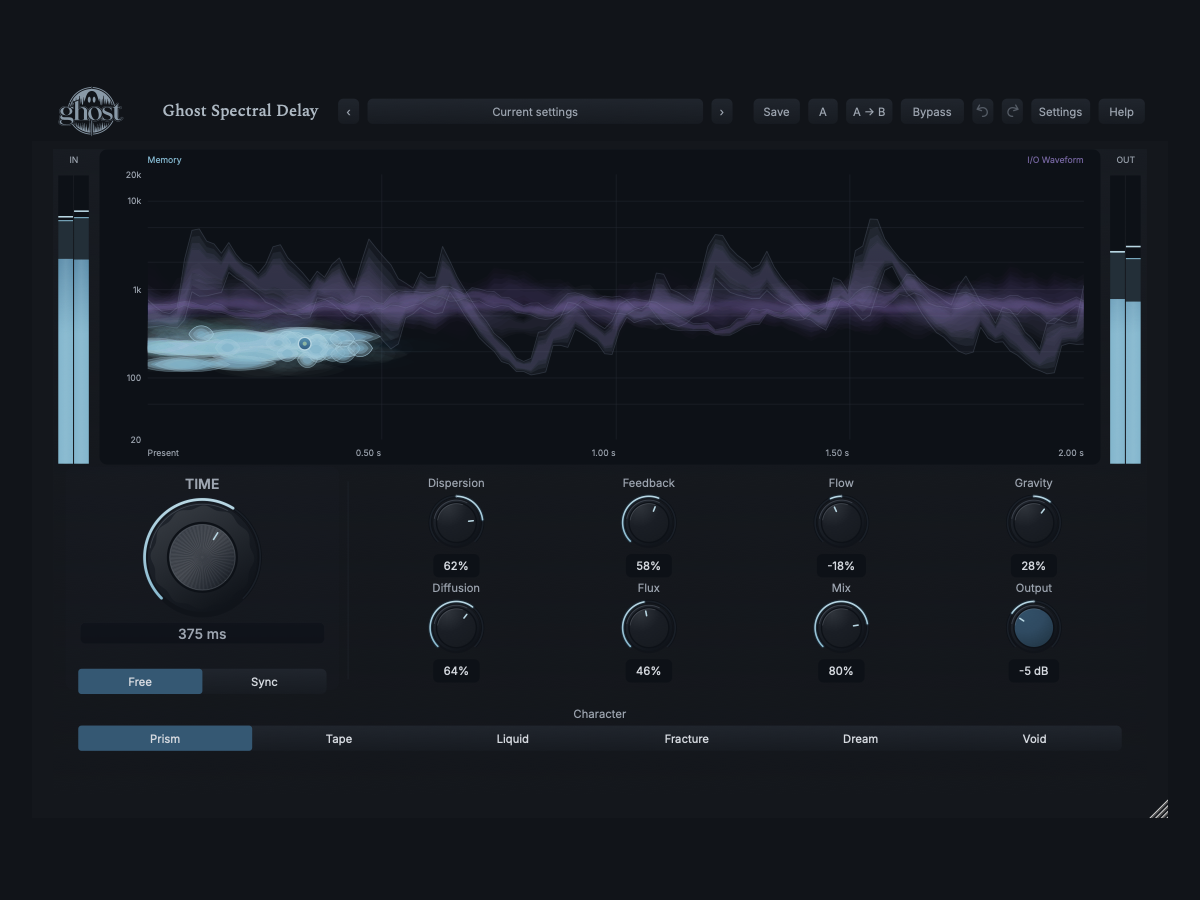
Ghost Spectral Delay
Delay remembers. Ghost Spectral Delay evolves.
Ghost Spectral Delay is built around **living spectral memory** rather than a conventional feedback loop. At restrained settings it works as a musical spectral delay. Push further and different structures inside the sound can occupy different positions in time, reproduce into generations, develop rhythmic and harmonic ancestry, migrate through memory, collide with their own history, dissolve, mutate, disappear, and return. The delay line becomes less like a row of repeats and more like a memory system whose contents can reorganize around the harmonic and rhythmic language of the performance.
LIVING ECHOESSPECTRAL MEMORYEVOLVING GENERATIONSTIME FRACTURES
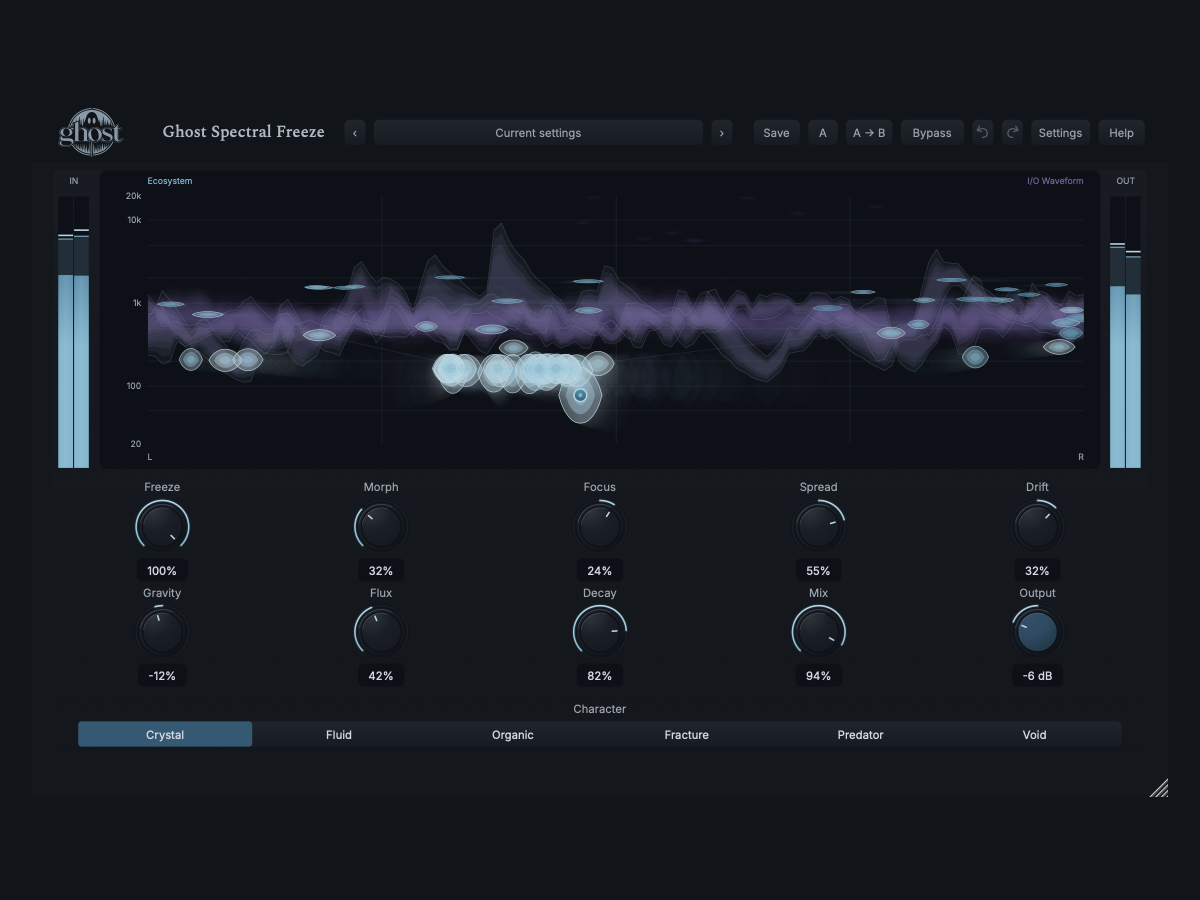
Ghost Spectral Freeze
Freeze the sound. Not its life.
Ghost Spectral Freeze captures a **spectral ecosystem**, not a static FFT frame. It can produce the clean, sustained freeze you expect—but the captured sound can also accumulate history, hybridize, reproduce, mutate, organize, compete, crystallize, fracture, fossilize, disappear, leave scars, and reorganize under your gestures and the incoming performance. A frozen moment stops being a photograph and becomes a place where spectral identities continue to live.
ENDLESS SUSTAINLIVING SPECTRACRYSTALLIZED TEXTURESEVOLVING FREEZE
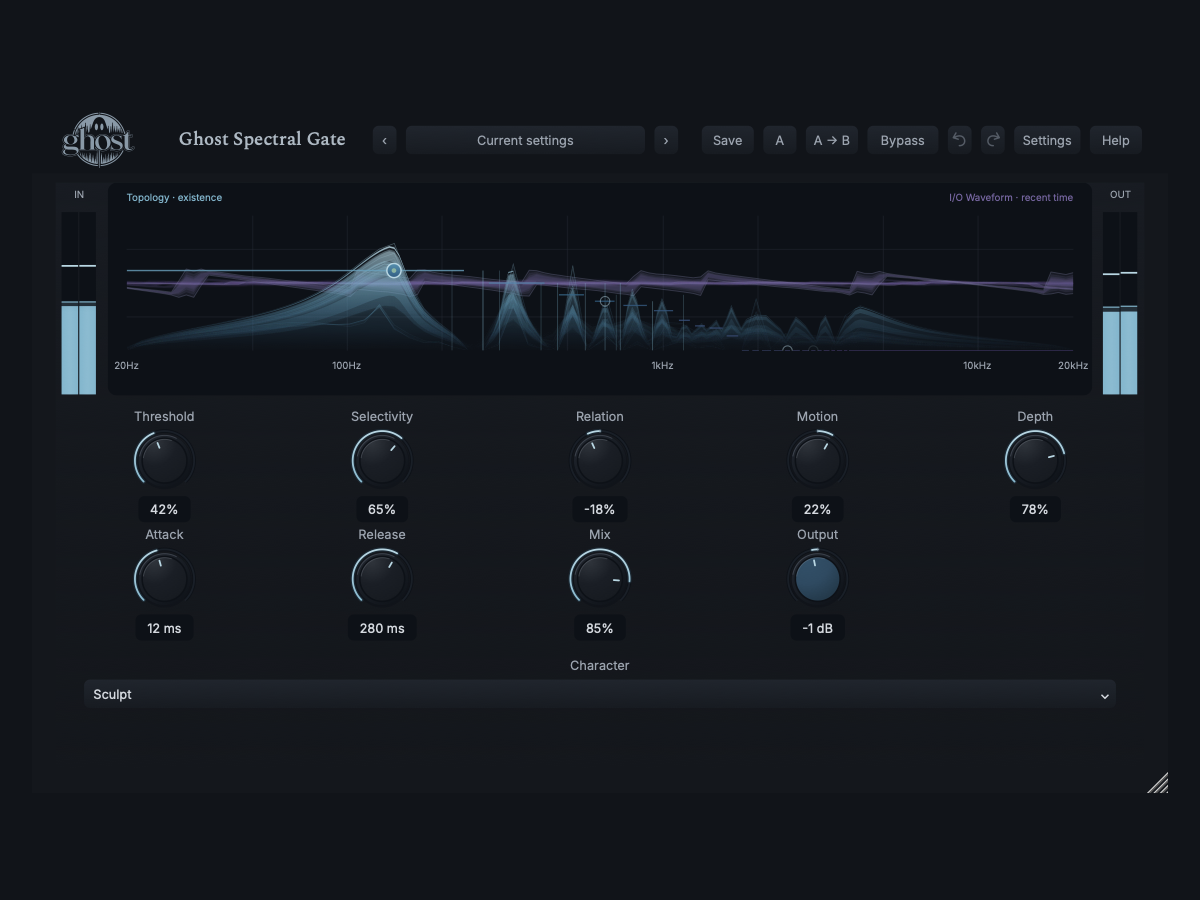
Ghost Spectral Gate
Decide what gets to exist.
Ghost Spectral Gate is an intelligent gate built around **spectral existence**. At practical settings it can cleanly control unwanted material. Push its deeper controls and structures inside the sound begin to cooperate, compete for spectral territory, propagate survival through relationships, fracture into coherent pieces, emerge from ghost states, or disappear into negative space. Threshold is only the beginning. Selectivity determines how precisely existence is carved. Relation decides whether structures help or fight each other. Motion lets permission travel. Depth determines how complete absence becomes. The front panel controls the outcome while the spectral engine handles the complexity.
SURGICAL CLEANUPSPECTRAL SURVIVALMOVING GATESNEGATIVE SPACE
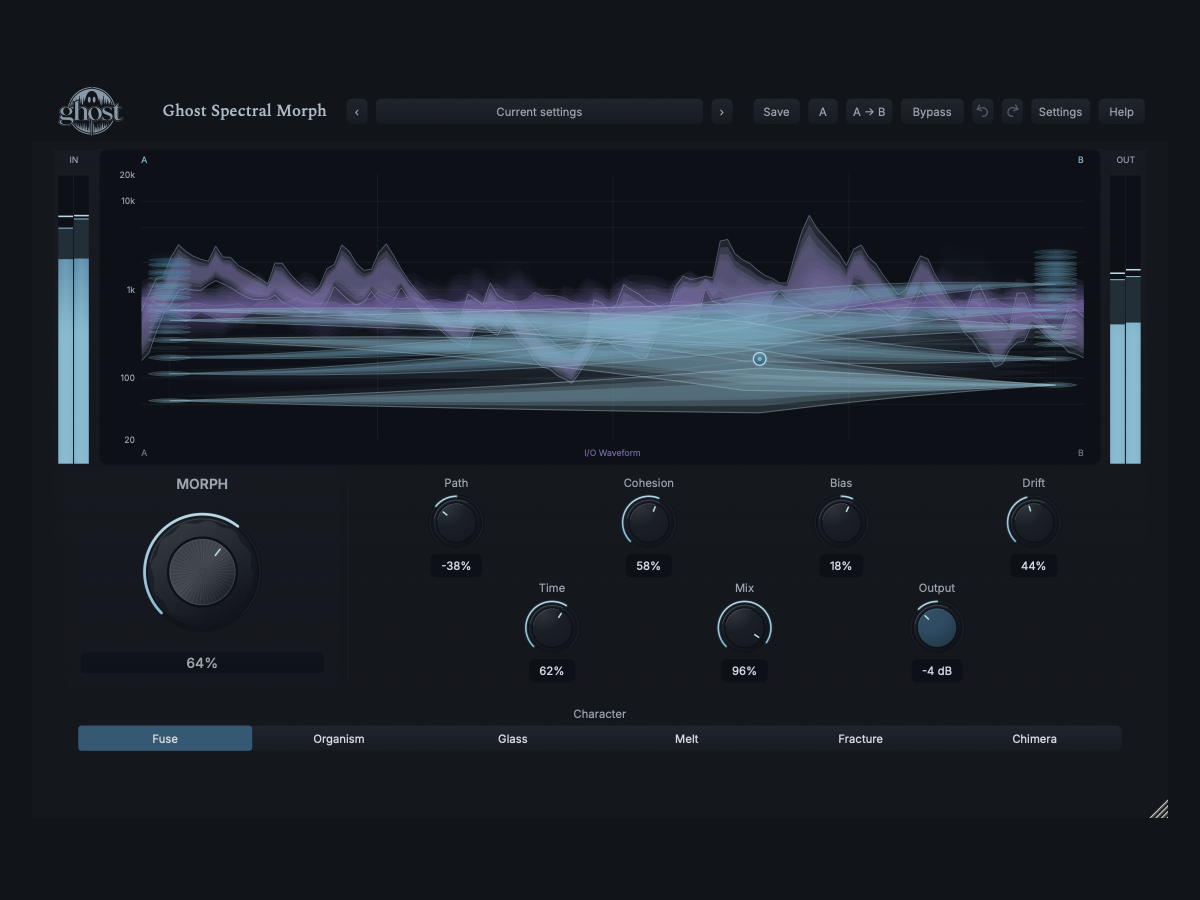
Ghost Spectral Morph
Don't crossfade two sounds. Discover what exists between them.
Ghost Spectral Morph is a two-source transformation instrument that searches for meaningful correspondence between sounds, then builds a continuous identity between them. It does not simply fade A out while B fades in. Harmonic roles, spectral shapes, transients, formants, bandwidth, timing, and larger structural relationships can be matched, bent, broken, rebound, and transformed. Morph chooses the identity. Path decides how you travel there. Cohesion determines whether relationships stay locked or become unstable. Bias changes which source contributes which traits. Drift allows the hybrid to explore. Time lets structures correspond even when they do not occur at the same moment.
TRUE HYBRIDSIDENTITY MORPHINGFORMANT TRANSFERIMPOSSIBLE IN-BETWEENS
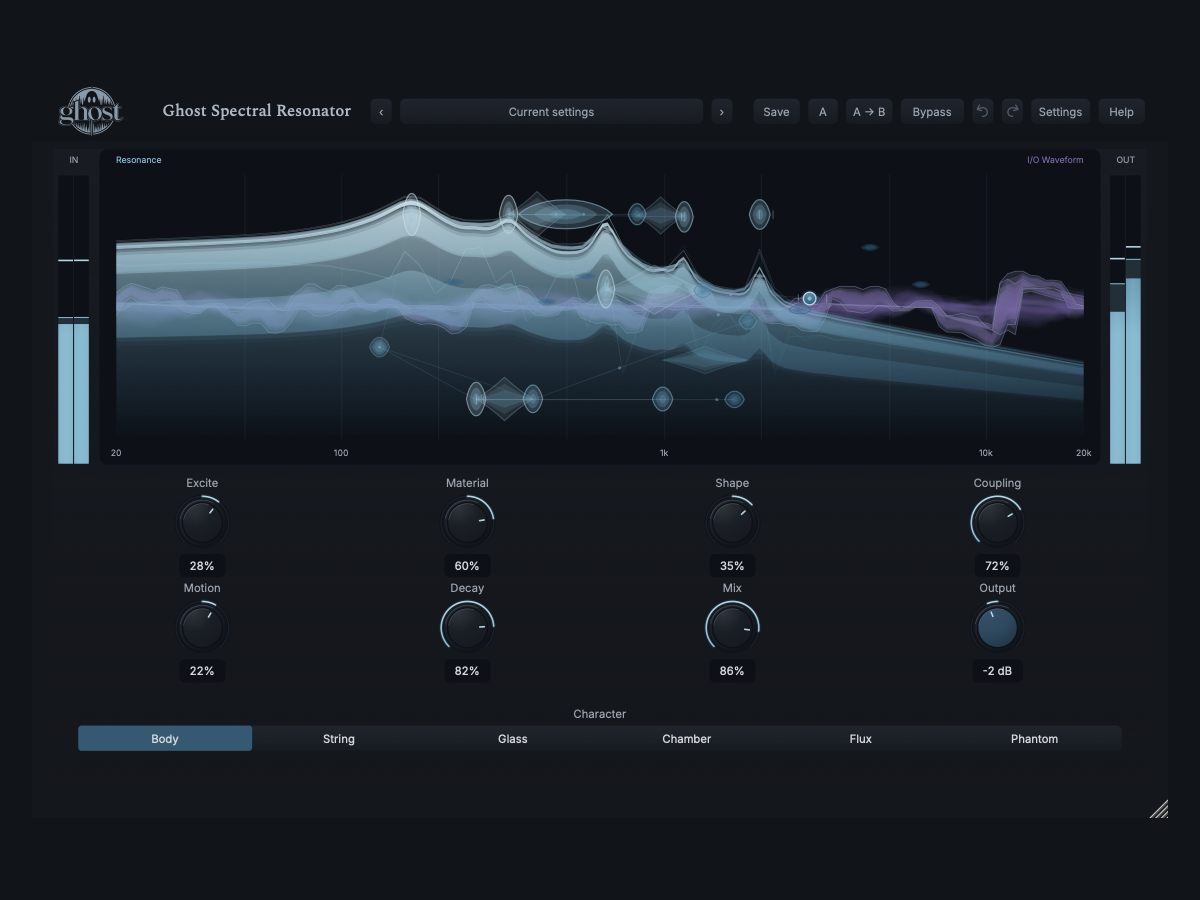
Ghost Spectral Resonator
Find the instrument hiding inside the sound.
Ghost Spectral Resonator discovers resonant potential already present in the source and turns it into a playable network of acoustic bodies. Instead of beginning with a fixed bank of arbitrary resonators, it analyzes harmonic families, spectral peaks, formants, and transient excitations, then builds resonant structures from what the sound gives it. Those bodies can exchange energy, entrain, compete, bond, fracture, migrate, and decay. Material changes the physical rules. Shape changes resonant geometry. Coupling determines how strongly bodies interact. Motion gives resonant energy somewhere to go.
HIDDEN INSTRUMENTSSOURCE-BORN RESONANCECOUPLED BODIESPLAYABLE MATERIALS